





Summary
Presently, it is easy for me to have a vehicle in the event of a call. My family is disturbed by the news of the trouble, and I am disturbed by the news. My family is disturbed by the news. My family is disturbed by the news. My family is disturbed by the news. My family is disturbed by the news. My family is disturbed by the news. My family is disturbed by the news. My family is disturbed by the news. My family is disturbed by the news. My family is disturbed by the news. My family is disturbed by the news. My family is disturbed by the news.
Main properties of technical ceramics in industrial plants
Technical ceramics are among the most effective materials against wear due to their high hardness: for technical alumina, values typically reach close to 9 on the Mohs scale (with Vickers hardness values that, depending on the quality and formulation, can range around ~1200–1800 HV). This translates into excellent abrasion resistance compared to many unprotected steels.
This hardness, combined with very low porosity, allows for Smooth and compact surfaces, characterized by low surface roughness and excellent sliding properties, which reduce adhesion.
Performance depends significantly on the quality of the raw material, particle size control, and the sintering process: these factors determine the density, porosity, and stability of the microstructure. Thermal shock resistance varies depending on the ceramic material selected and the operating cycle (temperature, gradients, clamping, and support).
Chemical inertia makes them ideal for processes involving sludge, corrosive powders, or particularly harsh atmospheres, while dimensional stability allows for maintain geometries and tolerances even after thousands of hours of continuous use. It is important to consider that technical ceramics have high hardness but brittle behavior, which is why they are often integrated with elastomeric supports capable of absorbing shocks and dynamic stresses.
Why Use Technical Ceramics in Industrial Plants
In bulk material handling, pneumatic transport, and processing plants (minerals, clinker, cement, wood, waste-derived fuel, glass, paper), wear is one of the main Causes of plant downtime and maintenance costs. The combined action of erosion (the gradual removal of material caused by the impact of solid particles carried by a fluid or gas flow), abrasion (continuous rubbing of hard particles), and impact (localized shocks, such as during changes in direction) rapidly damages pipes, bends, screw conveyors, valves, hoppers, and mills.
In this context, technical ceramics offer tangible benefits:
- They increase wear resistance compared to unprotected metal components, especially in areas where particulate matter continuously “works” on the walls;
- They maintain stable performance even in the presence of demanding process temperatures and harsh chemical environments, within the limits imposed by the support and fastening system.;
- They allow to create robust and durable interior linings, even on complex shapes, using tiles, ceramic mosaics, or composite solutions (rubber + ceramic), designed for the high-speed transport of abrasive materials.
In operation, when the lining is properly designed (in terms of material, thickness, geometry, and fastening), the frequency of component replacement can be significantly reduced, with direct effects on maintenance costs and downtime.
Main advantages: durability, maintenance, and operational continuity
1. Component lifespan
Thanks to their hardness and abrasion resistance, technical ceramics significantly extend the service life of surfaces exposed to wear. In applications such as the transport of cement, minerals, ash, or recycled materials, a well-designed ceramic lining can extend the service life of pipes, elbows, or handling components to levels far exceeding those of unprotected steel components.
In practice, a well-sized ceramic coating maintains the component's profile and functionality for longer, preventing rapid thinning and material loss. For this reason, SARO integrates technical ceramics and filled resin systems into its solutions, choosing the technology based on abrasion, erosion, and impact presence.
2. Reduction of maintenance interventions
By concentrating protection on the areas actually subject to wear, technical ceramics make it possible to extend the intervals between maintenance operations. This results in fewer downtimes for replacements and repairs, as well as more predictable maintenance that is less likely to be “emergency-driven.”.
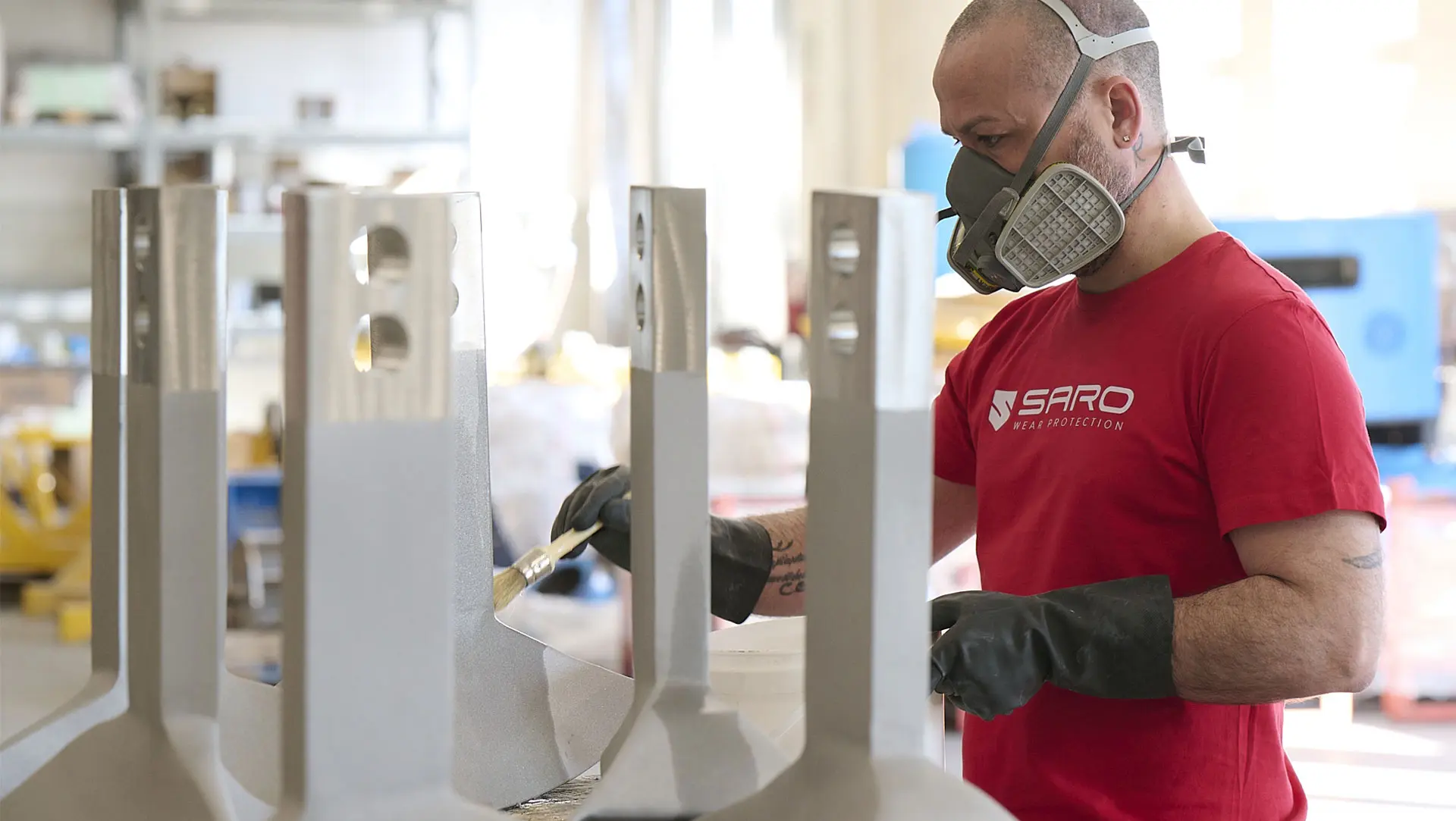
Hybrid solutions offered by SARO, such as ceramic-filled epoxy pastes — including RESINALCERAMICA® T250 A&B; e SARPOL RP08 — These are primarily chosen when a component has complex geometries or is difficult to coat using traditional methods, and when plant downtime must be kept to a minimum.
These resin-ceramic formulations allow for rapid and localized restorations in high-wear areas, extending the component's service life just enough to reach the scheduled shutdown, without having to replace the entire part.
Typical applications include chutes, pipes, pump casings, and hoppers, where they help reduce abrasion and impact and keep the plant operational until scheduled maintenance.
3. Operational continuity and productivity
Reducing wear-related failures increases plant availability and reliability, two key factors for overall productivity and efficiency. The use of technical ceramics at the most critical points in the process drastically reduces the likelihood of breakage, perforations, or malfunctions caused by surface degradation, with a direct impact on operational continuity.
Studies on the role Technical ceramics in plant efficiency also highlight how smooth and durable surfaces improve material flow, helping to reduce local turbulence and increases in head loss due to surface roughness and progressive wear of the internal walls.
Comparison of standard components and SARO technical ceramic solutions
| Appearance | Without technical ceramics | With SARO technical ceramics |
| Component duration | Reduced useful life, frequent replacements | Much longer useful life in high-wear areas |
| Maintenance frequency | Recurring unscheduled maintenance, unexpected downtime | More programmable maintenance, fewer emergency interventions |
| Business continuity | Increased risk of failures and unplanned downtime | Greater plant availability and production stability |
| High-temperature behavior | Possible deformations and degradation over time | Stability even at high process temperatures (within the limits of the support and fastening systems) |
| Chemical resistance | Low corrosion resistance | High chemical inertia, ideal for corrosive sludges and powders |
How SARO designs and creates custom technical ceramic solutions
For a ceramic coating to truly work, the material and method are equally important: field assessment, wear point analysis, format selection (tile/mosaic/hybrid), surface preparation, and proper installation. SARO supports clients with technical assistance from the initial diagnosis through installation and performance monitoring.
SARO specializes in wear protection for industrial plants, machinery, and components, with a customized approach that integrates technical ceramics, polymer resins, and pre-clad plates. The portfolio includes ceramic coatings (tile and mosaic), ceramic-rubber solutions for impact, pre-clad components for pneumatic transport, and filled resin systems for localized repairs.
Active since 1994, SARO has developed specific expertise in anti-wear protection for the treatment and transport of abrasive materials. Since 2000, the company has been among the first in Italy to offer ceramic-rubber hybrid solutions to combine abrasion resistance and shock absorption. This path has consolidated pioneering know-how in the design of anti-wear linings and components, now applied on a case-by-case basis according to actual operating conditions.
The work method can be synthesized in four steps:
- Problem analysis
We start with a detailed analysis of the system: type of material transported or processed, flow rates, speeds, temperatures, presence of impacts, line layout, and most critical wear points. On this basis, the components to be protected are identified (pipes, bends, valves, mills, separators, hoppers, resinators, etc.). - Selection of the most suitable technical ceramic solution
Once the critical issue is identified, the type of technical ceramic (sintered alumina tiles, shaped inserts, ceramic mosaics), the thickness, and any combination with rubbers or resins are selected. The choice is guided by abrasion/erosion, presence of impacts, temperature, chemical conditions, component geometry, and installation method, with the aim of maximizing operational life and reliability. - Solutions are not one-size-fits-all: Formats, geometries, and installation patterns are defined based on actual operating conditions. SARO can provide pre-lined components or perform relining on customer parts, either in the workshop or in the field, depending on downtime and site logistics.
- Field application and in-time assistance
The application can occur directly in the field to limit plant downtime, or through pre-coated components ready for replacement. Over time, SARO supports the customer in monitoring the performance of technical ceramic protections and, if necessary, proposes optimizations or extensions of protected areas based on actual operating data.
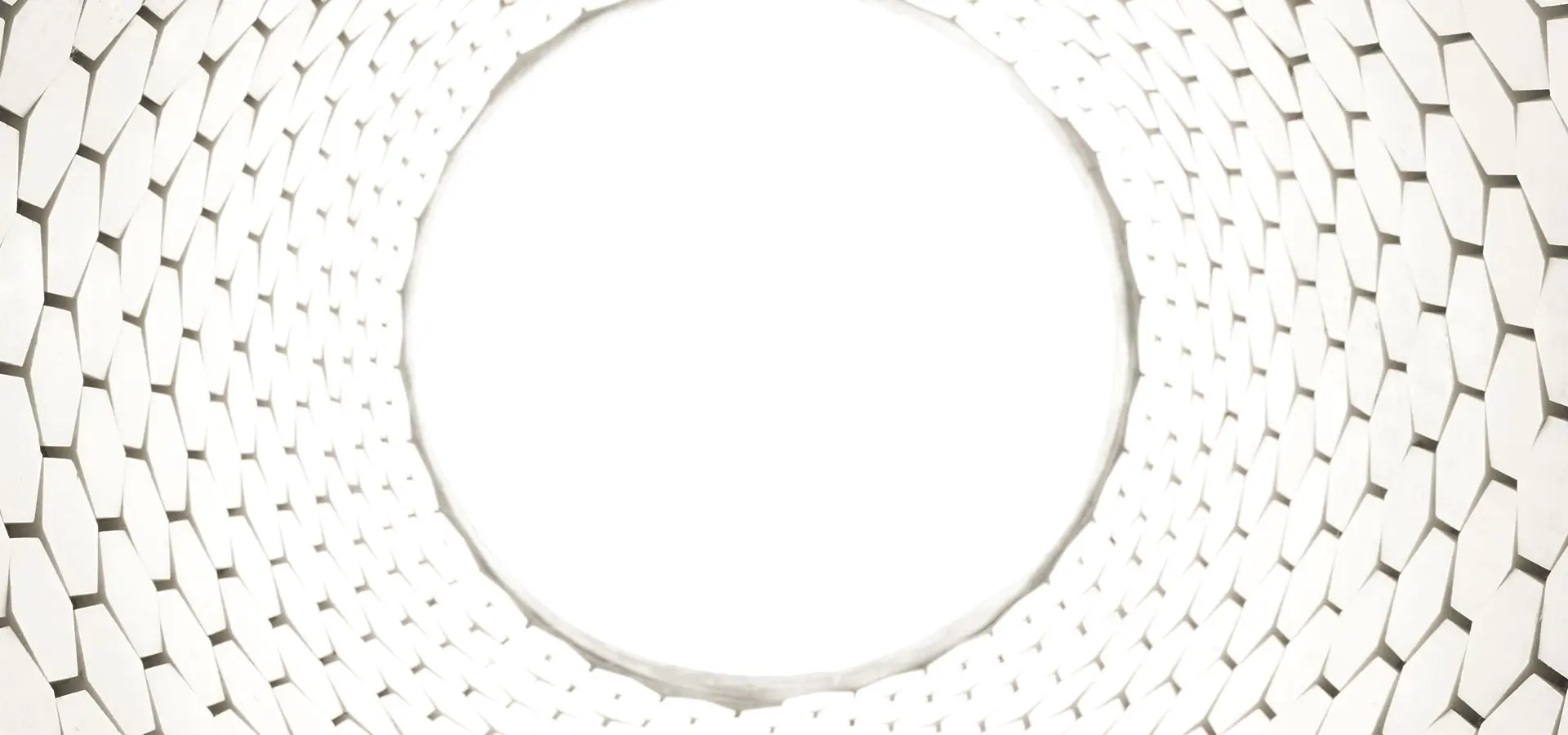
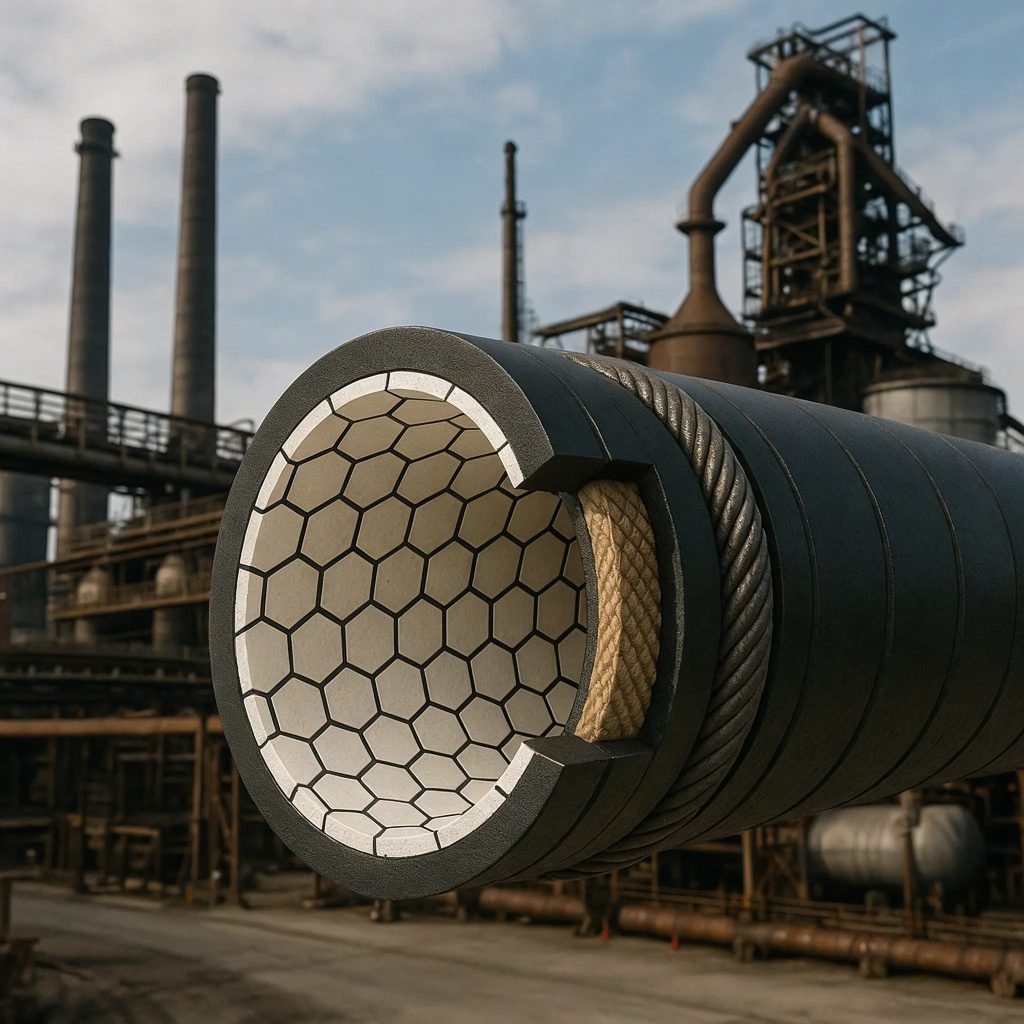
An example of a hybrid solution is represented by Wear-resistant flexible hoses HEXAGON & TETRAGON HOSEHexagonal or square ceramic inserts are integrated into the rubber to combine installation flexibility and abrasion resistance, particularly in the pneumatic transport of abrasive materials.
Technical ceramics for material transport and treatment lines
Transport lines and material treatment sections are among the areas where the use of technical ceramics yields the most significant results in terms of wear reduction. Piping, bends, mills, separators, valves, and hoppers operating under highly abrasive conditions require targeted protection.
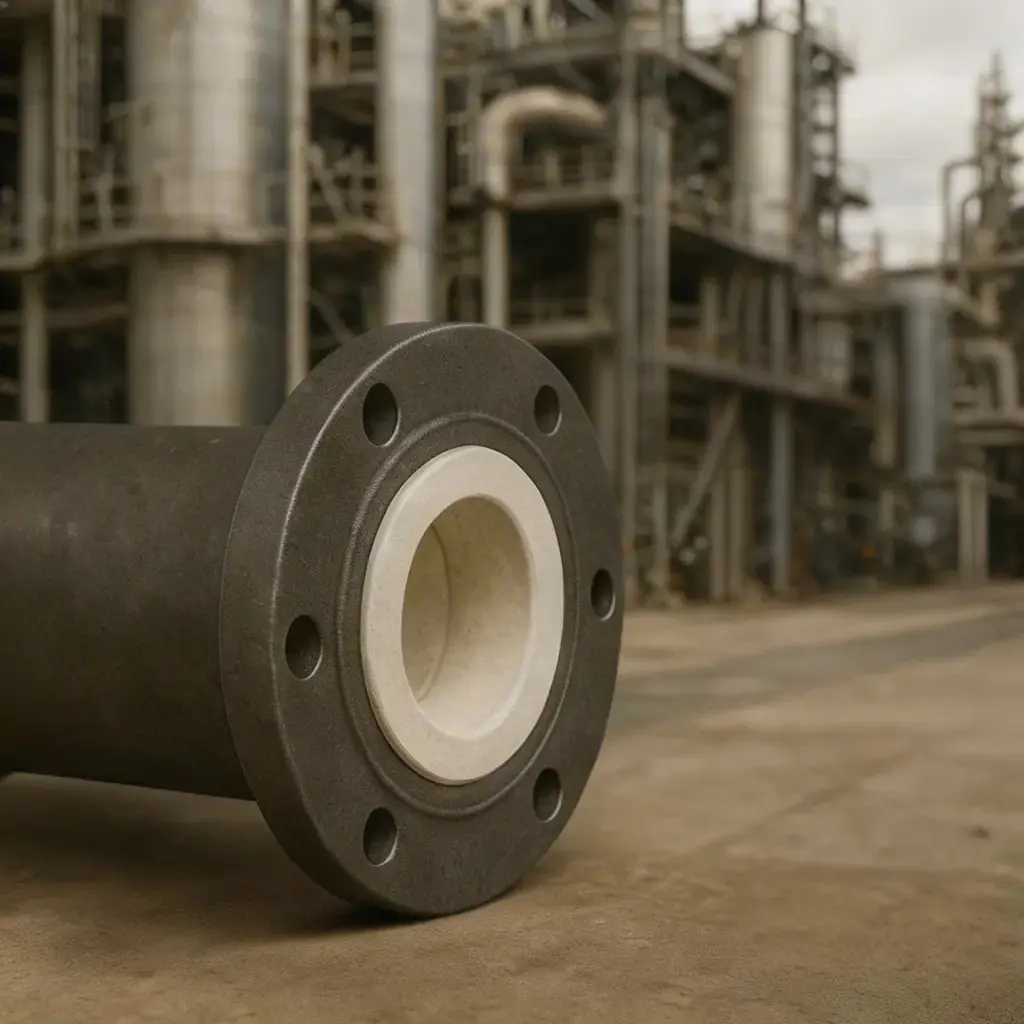
- In the transport lines (tubes, bends, ducts for pneumatic or mechanical transport), technical ceramics reduce the wear of internal walls, maintain a constant cross-section, and limit the risks of perforation, leakage, and material loss. HEXAGON & TETRAGON HOSE ceramic-lined flexible hoses were developed precisely for this purpose, combining flexibility and abrasion resistance under intensive use conditions.
- In bulk material handling processes (mills, crushers, separators, valves, resinators, hoppers), technical ceramics protect the most exposed areas subject to continuous passage of dust/inert materials at critical impact angles. SARO applies these solutions to selected plant components and areas, evaluating on a case-by-case basis whether to use “pure” ceramic, ceramic-rubber (for impact), or filled resin systems (for repair and protection).
Thanks to this experience and a portfolio of technologies combining technical ceramics, polymer resins, and pre-clad sheets, it is possible to protect equipment throughout the entire process, from initial handling to final treatment stages, reducing wear and improving overall line reliability.
FAQ: Technical Ceramics in Industrial Plants
Technical ceramics have the widest applications in the following industrial sectors:
Technical ceramics are used where wear is a process variable: cement plants, mining, steel mills, waste-to-energy/power generation, glass, paper mills, recovery and recycling, as well as many applications involving powders and bulk materials with high abrasive power.
Can technical ceramics also be applied to existing systems?
Yes. Interventions are carried out on existing systems with on-site coatings or by providing pre-coated components (e.g., elbows and pipes) ready for replacement. The choice depends on accessibility, downtime, availability, and the criticality of wear points.
How is the most suitable type of technical ceramic chosen?
The choice depends on the material being handled, speed, impacts, temperature, chemical conditions, and geometry. Based on these parameters, the following are defined: type of ceramic, thickness, format (tiles/mosaic), optional elastomeric support (ceramic-rubber), and fastening system.
Is it possible to combine technical ceramics with other anti-wear technologies?
Yes. In many cases, the best solution is hybrid: ceramic-rubber where shock absorption is needed, filled resins (resin-ceramics) for repairs or difficult areas, and pre-cladded plates when the impact load is medium and abrasion is dominant. SARO often works with these combinations, choosing the technology and construction details based on the installation point.
Request a custom technical ceramic solution for your system
If you have premature wear on curves, hoppers, chutes, valves, or pneumatic conveying lines, the most effective approach is to start with a diagnosis of critical points and actual operating conditions (material, flow rate, speed, impacts, temperature). SARO can support you in selecting the most suitable protection among technical ceramics, hybrid systems, and filled resins.
For a Technical comparisonPrepare some photos of the wear points and, if available, flow/speed data and maintenance history. This helps to quickly identify the solution “closest” to your system, without oversizing.